Rebuilt this portfolio as a static-first Astro site that helps recruiters, hiring managers, and clients understand Chris's work quickly.
Solo product engineering project spanning content modeling, UX framing, accessibility, and deployment guardrails.
Built as a static, crawlable page so browser navigation remains dependable.
Structured to move from explanation to supporting detail without requiring outside context first.
Why review this
A clear view of the work, the constraints, and the decisions behind it.
Summary
Rebuilt this portfolio as a static-first Astro site that helps recruiters, hiring managers, and clients understand Chris's work quickly.
Context
Solo product engineering project spanning content modeling, UX framing, accessibility, and deployment guardrails.
Why it matters
Static-first Astro architecture
Product judgment expressed through information hierarchy
Accessibility and QA guardrails baked into delivery
Highlights
Content model and route architecture
Hiring-focused UX decisions
Quality and accessibility guardrails
Next step
Use the links below to continue to projects, resume, or contact.
What this project is
Clear context before you review the details.
Built a static-first portfolio that makes Chris's role, selected work, and contact path easy to review on any device.
Problem framing
What had to change, and why it mattered.
The earlier portfolio made Chris's work harder to assess because broad claims, scattered navigation, and thin project context hid the strongest signals. The rebuild needed to make his role, judgment, and technical standards clear without asking visitors to decode the interface.
Role and contribution
Where Chris was directly accountable.
Chris owned the project end to end, including architecture choices, content modeling, visual direction, accessibility constraints, testing strategy, and deployment guardrails. He paired product framing with implementation so the site would read as clearly as it was built.
Implementation timeline
How the project moved from cleanup work to a clearer hiring-focused experience.
Started by tightening the content contract and route boundaries so every project page could keep one stable source of truth.
Refined the information hierarchy and validation guardrails together so the final site communicated judgment through both structure and implementation discipline.
Work in practice
Concrete evidence, decisions, and outcomes.
Content model and route architecture
Built a canonical content path so pages, projects, and metadata stay typed, crawlable, and consistent without parallel data sources.
Defined Astro content collections with Zod validation to catch schema drift at build time instead of after publishing.
Centralized project normalization in helper modules so routes stay thin and static generation remains predictable.
Preserved canonical URLs and shared shells to keep navigation and metadata behavior consistent across the site.
Hiring-focused UX decisions
Organized the site around fast orientation, strong project context, and clear next actions instead of a gallery-style presentation.
Rewrote route framing and section hierarchy to answer what the work is, why it matters, and where to go next.
Chose an editorial visual system with deliberate typography, contrast, and spacing rather than interchangeable portfolio defaults.
Kept onward paths to projects, resume, and contact visible so deeper project pages do not become dead ends.
Quality and accessibility guardrails
Paired the design and content work with regression protection so credibility does not depend on manual spot checks.
Added Node-based regression tests that validate content contracts, built HTML output, and static-first behavior.
Preserved keyboard access, visible focus states, reduced-motion handling, and semantic page structure as implementation constraints.
Kept deployment verification aligned with `npm run check`, `npm test`, and `npm run build` to prevent silent regressions.
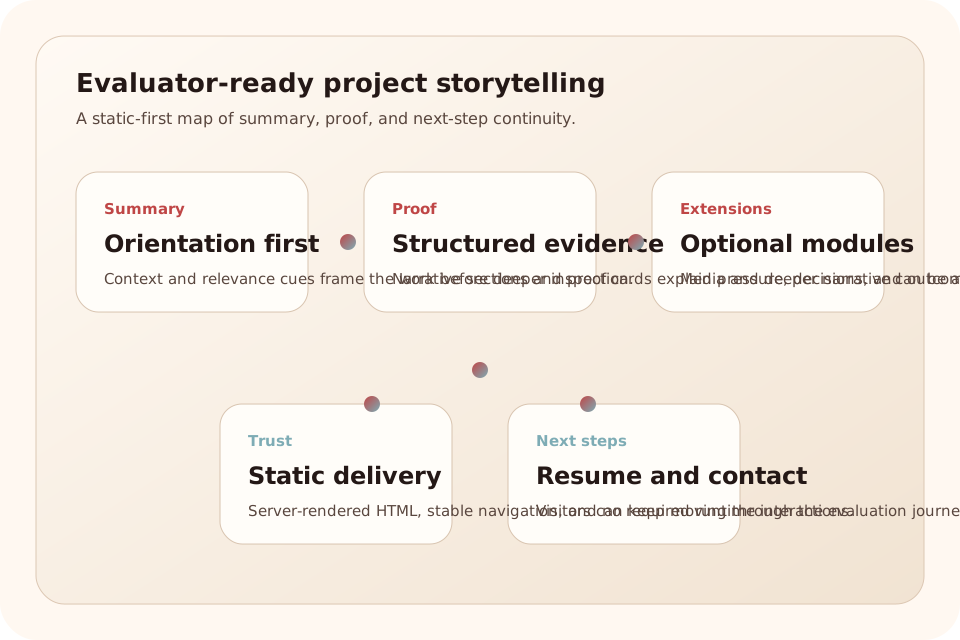
Project structure snapshot
A quick visual of how the final project pages connect summary, supporting detail, and onward action.
The media seam stays optional and static-first, so richer project visuals can be added later without forcing every entry into a gallery pattern.
Kept inside the static project media boundary so richer visuals can stay useful, lightweight, and optional.
Implementation evidence
Additional notes that add implementation detail.
One of the central decisions was to make credibility come from coherence. The content model, route structure, metadata, and visual system all needed to reinforce the same message: this is work shaped by clear tradeoffs, not just assembled screens.
The implementation also avoided unnecessary client-side behavior. For a portfolio meant to support calm, dependable review, static delivery and clear project context create more trust than decorative interactivity.
Optional references
External artifacts for a deeper review, not for basic understanding.
Optional if you want to inspect the implementation details and commit history behind the current site.
Next step
Continue once this project matches the conversation.
When this project feels relevant, continue to the latest resume for the formal experience behind the work, or move straight into contact if you already have enough signal to talk.